



A share represents ownership in a company and comes with certain rights and obligations for the shareholder. The share structure of your Singapore company can be as simple or as complex as you wish, depending on your needs. Let’s take a look at what share structures are available to your company in Singapore, and how you would use them.
Two common classes of shares are
Ordinary shares
Preference shares
What are Ordinary Shares?
Ordinary shares are the most common class of shares and many private limited companies are incorporated with ordinary shares. They have no special rights or restrictions. Ordinary shares rank under the preference shares in terms of dividend distribution and/or voting rights.
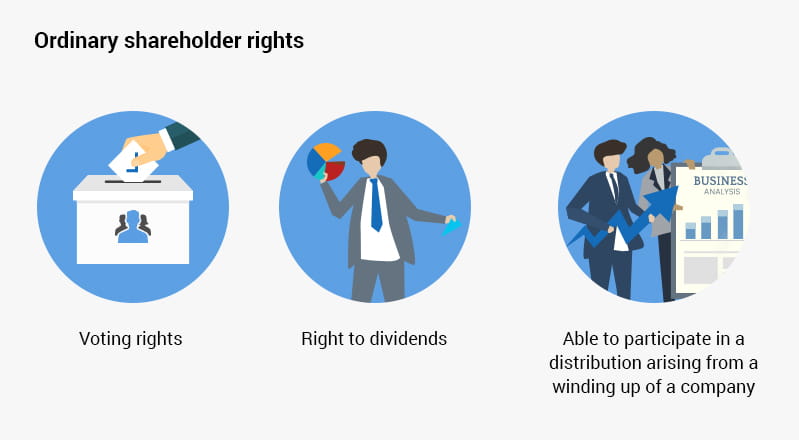
Typically, ordinary shares have the following rights:
- Each share has its voting rights
- Each share has rights to dividends
- Each share is able to participate in a distribution arising from a closing/winding up of a company
Administration of ordinary share is straight forward as each share has voting rights and rights to dividends.
You may choose to have different classes of ordinary shares, such as ‘Class A Ordinary Shares’ and ‘Class B Ordinary Shares’ with has different rights such as “Voting right” “Right to dividends” etc. A Singapore company shares do not have par value hence you will be able to issue shares at the different values at the point of time.
Read more about Singapore Company shares at Rikvin.com.